-->
skip to main | skip to sidebar
Showing posts sorted by date for query crusoe. Sort by relevance Show all posts

Friday, 2 April 2021

Jeff Hayes 1953 - 2021

The entertainment industry's a sociable business, but mostly you're working in an ever-changing team that reconfigures with every project. It's always great to see the good people again, and you can try to avoid the not-so-good people the next time around. 

But meeting someone professionally and quickly getting the sense that here's a friend for life - well, that's not so common.

Jeff Hayes, who died on March 8th, was already in place on Crusoe when I came on board. It was a show made by a British production company for NBC, and they'd needed to bring in a producer with the experience to handle an international drama to the requirements of an American network. Jeff had done it all, from VP of Paramount's network TV division (where he'd overseen the development of Star Trek: TNG) to building a production operation on Australia's Gold Coast as President of Village Roadshow Pictures TV. He was Hollywood born and bred - his father was a talent manager and his mother an in-demand actress, and - as he told my Disney-freak daughter - as a toddler he'd been there on Disneyland's opening day.

But far from being the corporate type, Jeff liked making stuff. It wasn't about money, power, or status; "in it for the joy" is the phrase we used. He was my first American producer and the way we worked together changed my outlook for ever.

Crusoe faced some problems when I got there. A Canadian director/writer team had turned in their take and it didn't match the swashbuckling brief that had secured the network's involvement. Time was ticking away and they had no show to go with the title they'd sold. I thought I was pitching the London office for an episode assignment when I asked what the showrunner's angle might be; instead I was invited to offer one. A couple of weeks later I was on the phone with Jeff, planning a production strategy for a show that hadn't been written yet.

Here's what it took me a while to get my head around. My position in the team was not what I'd been used to. My screenwriter relationships up to that point had largely been that of supplier and client. To Jeff I was the story guy he was making the show with, and now I was here we could get on with the job.

The series pitch to NBC specified flashbacks to Crusoe's life in England. We'd yet to engage any episode writers, so I proposed writing those scenes in a block so we could get them shot while everything else was being firmed up. With Jeff I met no question over whether I could deliver; it was my responsibility and it left him free to focus on other things. 

We spent a week of scouting in and around York along with production designer Jonathan Lee and line producer Andrew Warren. Each evening in the bar of the Station Hotel I'd describe the scenes I could picture for the locations we'd seen that day. At the end of the week, Jeff went off to prep them and I went off to write them. In what seemed like no time at all we were back, taking over the Shambles and clearing out York Minster for our enormous camera crane. Jeff was everywhere, quietly, pleasantly, firmly making it all happen. When we'd wrapped on that, he and partner Lisa went to set up a production base in South Africa and I set about writing the pilot.

Jeff spoiled me for life, I admit it. It's a collaborative medium but so often the collaboration's heavily weighted to one side. Now when I talk to screenwriting students I urge them to think, not as writers, but as showmakers.

We communicated constantly throughout the shoot, building as we went. As the end approached, the money was running out and Jeff reckoned he'd run through just about all of the local guest talent. We hatched a plan using our principal cast and burning the sets, and that two-part season finale is one of the pieces of TV that makes me most proud.

We stayed in touch after, met up when we could, always keeping alive the idea of working together again, making new plans as recently as February. When the bad news came my daughter wrote on Twitter: Jeff was one of the warmest and friendliest people I've met in this industry, with absolutely brilliant anecdotes for all occasions - he will be greatly missed. 

 And I can't really add anything to that.

 Jeffrey M Hayes 1953-2021

Thursday, 9 March 2017

Less than a week from now...

Wednesday, 15th March 2017:. NOVOCASTRIA MACABRE presents an evening with Stephen Gallagher in conversation with horror author Stephen Laws. Northern Mining Institute, Neville Hall, Westgate Road, Newcastle Upon Tyne NE1 1SE. 7pm, tickets £3


"An evening with Award Winning Screenwriter and Novelist Stephen Gallagher (DOCTOR WHO, CHIMERA, OKTOBER, BUGS, MURDER ROOMS, SILENT WITNESS, ELEVENTH HOUR, CRUSOE, STAN LEE'S LUCKY MAN, and more...) in conversation with horror author Stephen Laws. A superb writer, a great raconteur. Want to know what it's REALLY like to work in TV in the UK and US? What the differences are? Who holds the power? Which country better respects the writer? How to really make the most of your ideas? Whether you're a fan of his work of an aspiring novelist or screenwriter, this is an event for you."


What a fantastic venue. Immediately following the talk, I'll be offering to saw the leg off any willing volunteer.

Tuesday, 10 May 2016

Neither Houdini, Nor Doyle

If you just want the free story, scroll on down to the links. Otherwise...

Back when we were wrapping up Crusoe for NBC, producer Jeff Hayes pitched me a TV project that a colleague of his was looking to set up. It was called Houdini and Doyle and it was about the real-life friendship between the two, transmuted into a mystery-solving partnership for series purposes.

And no, as far as I'm aware it bore no relation to the Fox/ITV series that's currently on air. This particular historical pairing has a long history of producer appeal, and there have been a number of attempts to bring it into being.

In fact I'd already addressed it myself, kind of. I'd been inspired by another pairing of opposed ideologies when I read how, in the 1980s, convicted Watergate hardliner G Gordon Liddy teamed with LSD proselytizer Timothy Leary on a lecture tour titled Nice Scary Guy vs Scary Nice Guy. I imagined them going at it hammer-and-tongs during the debates and then retiring to the same hotel to unwind with a drink and divvy up the box office.

So long before that suggestion of Houdini and Doyle I'd written about the pairing of a spiritualist and a stage magician, based on their friendship but with characters of my own invention. Will Goulston is a stage magician, forced into a money-making venture after losing all his properties in a fire, while Frederick Kelly is raising money for a Spiritualist temple. Together they move from town to provincial town, maintaining a cordial relationship while rehearsing the same debate, night after night.
The man from the Blackburn Times said, "What are we going to see? Do we see physical manifestations?"
    "Goulston does all of those," Kelly told him. "You want to see a table tip and fly, Goulston does it better than anyone I've ever seen. I practice a form of clairvoyance that is far less spectacular. I handle objects and I say whatever comes into my mind. Rarely do I see more than that."
    "Do you raise the dead?" the Telegraph man said, and there was a tone in his voice and a look in his eye that seemed to urge Kelly to say yes, just so that the Telegraph man could go on into print and make him regret it.
    "I do not raise the dead," Kelly said and then he added, with care and certain emphasis, "Sometimes I believe the dead can speak through me."
    The Telegraph man switched his gaze. He looked like a bank clerk, but his manner showed the wiry energy of a whippet. "Mister Goulston?"
    "Let me be diplomatic," Goulston said. "I believe that Mister Kelly is an exceptional performer of his type."
    "Do you think he's a fraud?"
    "I have no doubt."
    "But no proof."
    "Proof will come."
To me the notion appealed not for its mystery-solving possibilities, but for the light it shines onto a deep-seated conflict that lies within all of us. The magician embraces mystery, but he knows too much; his curse is that mystery can never embrace him back. And although I wasn't familiar with the term when I wrote the story, you can say that Frederick Kelly is a 'shut-eye' medium, one whose belief in his own powers is sincere.

The novella's available to buy on Amazon, but from tomorrow until Sunday May 15th you can download it to your device for free.

Thursday, 10 September 2015

Crusoe on Drama

Crusoe begins a run on the UK's Drama channel this Sunday at 6pm. Channel 20 on Freeview, 158 on Sky, 190 if you're looking for it on Virgin.

Poldark offered you just the one shirtless hero. We give you two! Philip Winchester, Tongayi Chirisa, Anna Walton, Sam Neill, Sean Bean, Joaquim de Almeida, Georgina Rylance... the landscapes of South Africa's Nature Valley and the glorious historic city of York.


There's a shout-out to all our series writers here

And while we're at it, here's some action:


Monday, 15 June 2015

Peter Diamond

You won't know the face, I can almost guarantee it, although you'll probably have seen it a hundred times. More, possibly, as with a change of hat and or facial hair he'd often take several action roles in a single movie. Such is the work of the jobbing stunt performer, submerging his identity for the sake of the project; but it was behind the camera as stunt coordinator, fight arranger and swordmaster that Peter Diamond rose to A-list status. It was a career that covered five decades and the spectrum of screen work from domestic TV to international features. Highlander, The Princess Bride, the Star Wars movies... I can't begin to list them, we'd be here all day.

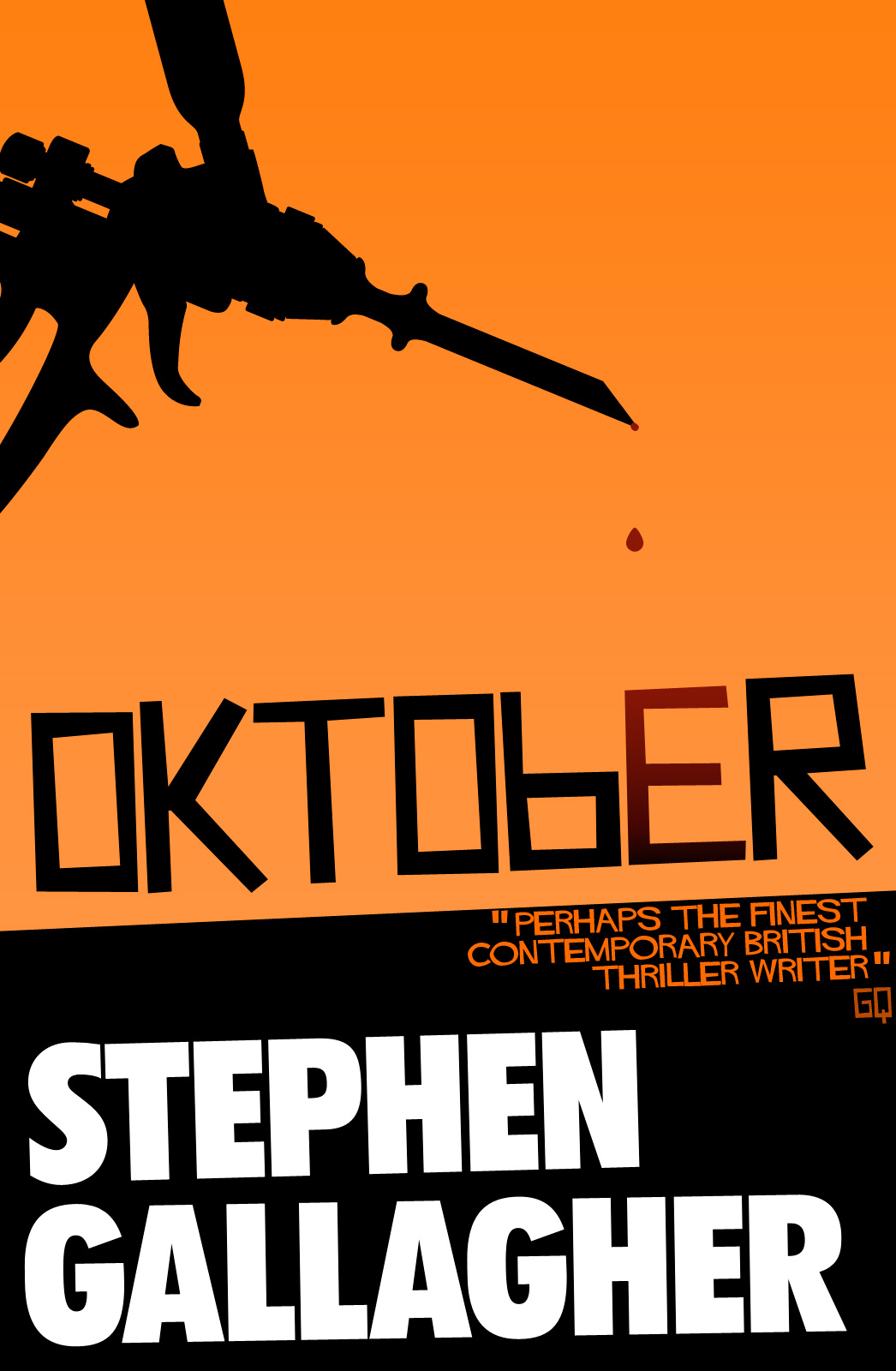
In 1997, by means that were devious, roundabout, or fortuitous, depending on how you're inclined to interpret them, I landed a project at ITV to which I'd attached myself as director. Didn't think I'd get away with that, but I did. The project was Oktober, an action-chase three-parter based on my novel of the same title.

Producer Brian Eastman surrounded me with some solid industry veterans that included Production Manager Ted Morley and First AD Roger Simons. But the choice of Peter for stunt coordinator was my own.

I'm so glad I got him. I count working with him as a highlight of my career. He was around the same age as my Dad, and I think I related to him in much the same way. Being a first-timer directing a big-budget show means being constantly on the brink of a terror to which you can never afford to give in. That was my experience, anyway. But if someone was trying to shake my faith in one of my choices, or if my confidence was being undercut in any way, a glance over at Peter would get me a nod or a shake of the head that no one else would see.

A week or so back, while I was preparing some clips for the Stories About Science  event, I noticed that Peter's credit was missing from Oktober's Internet Movie Database entry. Fixed that. Submitting a correction to the IMDB used to be a daunting undertaking, but the process is much smoother now. I hadn't looked at the show in years but I was prompted to recall the work with Peter on one of our biggest action sequences, the third-act confrontation between Stephen Tompkinson and Richard Leaf.

The fight was scripted in the way I've described elsewhere using Crusoe as an example, and with that as his template Peter choreographed the action with two of his stunt team. He didn't attempt to take over the direction, as I'd been warned that some of the younger stunt coordinators might. Stephen and Richard followed closely as the stunt players walked it through. While they were getting the moves, I was working out coverage with the operator. When we came to shoot it was 100% the actors, giving it their all. There's an insert of the huskies tugging at Richard's sleeve that was picked up later by a second unit, otherwise it's all as staged.


Peter died in 2004, on his way home from the set of Heartbeat - working to the end. His son Frazer is assembling a tribute site  on which he's hoping to pull together all of Peter's film and TV credits. No mean feat, given that there's somewhere around a thousand of them.

After Oktober, I didn't go all-out to direct again. Don't get me wrong, I'd loved the experience. But as a writer I had no new work ready, so had no money coming in for a year or more.

Also, when I put what I achieved next to what I'd imagined achieving, I thought I maybe wasn't as good at this lark as I'd hoped to be. After revisiting the clip, I have to wonder if I was being too hard on myself. I've seen worse.

(With a special shout-out here to editor Andrew McLelland, who I see is now cutting the Sherlock Christmas special)

Thursday, 23 April 2015

The Mean Streets Bundle

You know about StoryBundles, right? From their web page faq:

We take a handful of books—anywhere from six to nine—and group them together to offer as a bundle. Then you, the reader, can take a look at the titles we've chosen and decide how much you'd like to pay. Think of us like a friend that scours independent books for undiscovered gems, then bundles these titles together for one low price that you decide. Yeah, we mean it; you get to set the price that you want to pay!

Each bundle is available only for a limited time. If you miss out on the bundle, you'll have to buy the books individually from each author. We feature each bundle only once. Once it's gone, it's gone. 

Having the reader set the price is a pretty radical idea, but it seems to work. The proceeds also benefit three charities: SpecialEffect, Girls Write Now, and Mighty Writers. Which helps to mitigate the embarrassment I ought to feel in presenting Steven Savile's blog posting for today's launch of the Mean Streets crime fiction bundle.
THE MEAN STREETS BUNDLE
Curated by Steven Savile

Steven Savile writes: When we were first mulling over the name of this bundle, Mean Streets, I had a very focused vision on what I thought it was going to be. I'd just finished working on the collaboration with Prodigy (the hip-hop artist from Mobb Deep's The Infamous fame, not the Firestarter) HNIC and was thinking very much edgy and dark stuff, hardcore, maybe not the poets of our generation but certainly a voice for a slice of society that's been disenfranchised by the system of living. It was a great starting place, the back alleys of Brooklyn Heights or Across Hundred and Tenth Street into Harlem, but they aren't the only mean streets. What we've got here, we're talking the pheromones of the city, the detritus of a nation. We're talking about the criminal elements that move and shake just below the surface, unseen but everyone is aware they're there… We're talking seminal TV shows like The Wire and The Shield. We're talking about outcasts forced to live hard or die harder. We're talking about the Lone Ranger or Shane riding into town and fix that shit even as it explodes all around them. We're talking primarily about heroes and villains where the cities they do battle in are as important as any character.
The first book I picked for this bundle, Stephen Gallagher's Down River, is one of those books that made me want to be a writer. Hell, I think I emulated if not outright copied elements of it for a dozen (unpublished and never to be published) stories. I make no bones about it, I adore this man's work. On any list of favourite authors I've written down from the age of 19 (when I first discovered his novel Rain) right up until today, Steve would be one of the first names down. You might not be familiar with his stuff. I could embarrass him by saying he wrote the Warrior's Gate and Terminus episodes of the classic Doctor Who era (Staring Tom Baker and Peter Davison respectively), or talk about the pure excitement in the Savile household reading copies of FEAR MAGAZINE in preparation for the release of his first creator-driven show Chimera, which was something of an event for a fanboy like me… I could mention The Eleventh Hour TV show with Captain Picard at the helm in the UK and Rufus Sewell playing Hood in the US, or the reimagining of Robinson Crusoe from a few years back, or that short lived Christian Slater vehicle, The Forgotten. If you're an anglophile I could mention some pretty devastating episodes of Silent Witness…

But instead, I'll tell you a little story about the first time I met Steve. It was at a dealer table at a convention, and I'd got a copy of a signed limited edition of his short story collection in my hand. We'd talked a lot before this, even exchanged old fashioned letters, and he'd been in my anthology Redbrick Eden which raised money for homelessness in the UK, but this was the first time we'd seen each other face-to-face… and what sentence preceded that auspicious event? Me saying 'Jesus Christ, thirty five fucking quid for a book, that's ridiculous!' and a voice behind me saying 'I know… it's rather embarrassing, but I didn't set the price…' as you can imagine… I did a very good impression of the Incredible Shrinking Man at that point. Suffice it to say, Steve is top man, and a terrific writer. I read Down River, the story of Johnny Mays, back in 1989 and I have never forgotten it. That should tell you something very important about just how good this guy is.

*** 

The second book I picked for the bundle was an easy choice, Ed Gorman. I've never had the pleasure of meeting Ed, but I consider him right there with John D. McDonald, Robert B. Parker and Mickey Spillane's Mike Hammer when it comes to crime fiction. Ed is the very definition of a writer's writer. He's nothing short of brilliant READ MORE

There you have it. Pick up the bundle and look what you get. Clive Barker, Ed Gorman, Bill Pronzini, Steven Savile, Maynard & Sims, Tony Black, Sean Black, Dennis Niall Wilson, Tom Piccirilli, David Morrell. Heavy hitters, all.

A downside of seismic changes in the book market has been the lack of reliable guidance to the good stuff. Big sales and fan noise are just as likely to lead to disappointment as to discovery. There have been a number of experiments in curation, and StoryBundle seems to be one of the more successful. Their organisation and professionalism has certainly been impressive. It's a pleasure and an honour to be included.

Friday, 13 February 2015

Crusoe to UKTV

From C21 Media:
UKTV has picked up a trio of scripted series from UK-based producer and distributor Power, including NBC drama Crusoe... The 13-part adaptation of Daniel Defoe’s classic novel stars Sam Neil and Sean Bean and was originally commissioned by NBC in the US and produced by Power.
Crusoe was last shown on British terrestrial TV as a Christmas season special on (if I'm remembering correctly) Channel 5. The shows have been acquired for UKTV's Drama channel, which is free-to-air on Freeview.

More here.

Friday, 10 October 2014

The Accidental Blogger

I know I haven't updated the blog for some time, and if you've been checking, I'm sorry. It's partly laziness - so much easier to fire off a quick snarky mindbite on Twitter than to actually organise a thought or two into something worthwhile - and partly personal, but mostly it's business.

The personal - this summer I forced myself to take weekends off, and decided I rather liked it. If I don't consciously remove myself from the proximity of the study I can find myself drawn back to the keyboard. I'm not even aware of it happening, but I get pulled in by its gravity like one of those rolling coins spiralling down into a charity collection tub. And then, because I've sat myself down without a plan, I don't actually achieve anything when I get there - I just check my emails and fart around on Twitter.

I still check my emails and fart around on Twitter. But at weekends I do it on my phone, somewhere nicer.

The business part - well, last year was weird, including a bunch of projects you'll never hear of because they didn't happen. None of them was my own. In each case I was brought on board to develop a property which never made it to launch. For a while that suited me, again for personal reasons, but it quickly grew frustrating. I've developed stuff I didn't create before now, Crusoe being a case in point. But it's not what I'm in the game for.

So I blocked out some time and wrote a spec TV pilot, which no one in the UK wanted but which a producer friend took to MIPCOM where it was picked up by one of the US networks. More about that in due course.

Now that I had something to plan around, I could wind up the third-party commitments and schedule-in something of great importance to me, and that's the third Sebastian Becker novel. It's been on the stocks for a while, devised and researched and planned down to pretty much the last detail.

But here's the point I always have to make about novel writing and screenwriting; their working rhythms are totally different, and they can't coexist. They can't for me, anyway. A screenwriting career is a constant juggling of drafts, pitches and projects. For a novel I need to be able to dedicate big blocks of dedicated weeks.

The Becker books are complicated beasts to conceive and plot. If you've read either The Kingdom of Bones or The Bedlam Detective you'll appreciate that each is an ambitious one-off, not the kind of series where you can turn a handle and crank them out.

And their history is a complicated one too - of film rights bought and sold, of auctions and ousted editors and wound-up imprints and orphaned acquisitions... and for these reasons among many others the Becker books have a special importance to me, like the puppy that survived the hurricane. So much of this summer was set aside for the completion of The Authentic William James, and I'm happy to say that the pieces fit together.

None of which is what I set out to tell you.

The actual aim of this post was to shill for a Kindle promotion for the novels next week. It's to mark my birthday (don't ask). On Monday October 13th the price of four of my ebooks (two on Amazon UK, two in the US) will be slashed to... well, buttons at first. But only at first. The prices will rise by increments over the following week until they're back at the regular level. Apparently this enthuses people to jump in and buy early. Well, Amazon seem to think so. And they seem to be rather better at this than I.

These are the titles:


The Spirit Box and Nightmare, with Angel will be on offer at Amazon.co.uk. White Bizango and Red, Red Robin at Amazon.com.

I'll post a reminder and links on Monday.

Happy weekend.

Monday, 25 November 2013

An Award! An Award!

It doesn't happen often, so what the hell, let's shout. I'll write a proper update on the event tomorrow (ish - it's very late and we've been hitting the bright lights and low dives of Lisbon) but for now, from the press release:
Lisbon, Friday November 22nd 2013 On the eve of Doctor Who's 50th anniversary celebrations, one of its former writers has picked up the European Science Drama prize. LEGACY is Stephen Gallagher's two-part story for season 16 of the BBC flagship drama SILENT WITNESS. The European Science TV and New Media Awards ceremony took place on Friday night at Lisbon's Pavilion of Knowledge, Ciência Viva.

LEGACY follows the uncovering of a major 60s nuclear accident through a forensics team's piecing together of clues from its present-day aftermath. CRUSOE showrunner Stephen Gallagher has a track record as a creator of science-themed popular drama, from 90s  bioshocker CHIMERA to CBS/Bruckheimer's ELEVENTH HOUR. Gallagher is represented by Julia Kreitman at The Agency and Josh Hornstock at UTA.

The 2013 European Science TV and New Media Festival is organised by EuroPAWS and Euroscience with the support of BASF, Janssen, the La Caixa Foundation, and NEF: The Innovation Institute and Science Foundation Ireland.

IMDB: http://www.imdb.com/name/nm0302497/
Awards schedule and shortlist: http://europaws.org/awards/

Friday, 21 June 2013

Writing a Fight Scene

I've meant to do this ever since I saw a script in which a scene contained the unhelpful direction, "They fight". And no more.

Film fights have a dramatic purpose. Gone are the days when personal violence was offered as the test and proof of a hero's moral superiority.  Even in Fantasy, that's a fantasy that no longer convinces. These days even Superman takes a beating and has to resort to ingenuity in order to prevail.

So for a screenwriter to write "They fight", and then leave it to the director and stunt team to work out exactly how the conflict should play out to advance the drama, isn't enough. But nor is it helpful to choreograph every blow and angle on the page. The idea is to provide a dramatic plan, the broad strokes of staging that will release your experts to concentrate on detail.

Here are the script pages and corresponding sequence of a swordplay scene from Crusoe, performed by Philip Winchester and Georgina Rylance. I'll be the first to admit that I'm choosing this example because it went to plan and I'm happy with the way it turned out.


For me Georgina was one of the great 'finds' of the pilot; the part of Judy was cast only days before shooting and she nailed it with a strong, subtly off-centre and dangerous-feeling presence. Her showreel at georgina-rylance.com carries more Crusoe moments along with other work.

If you compare script to screen you'll see some differences - the odd line tweak or cut, Lynch's interjections to provide cutaways, bringing the daggers into the fight at a later stage - but you ought to get an idea of how the drama flows through the battle. Action in drama exists to show character, whether the crossed swords are real or verbal. Every incident is there to show us something. There's a corresponding swordfight in the series finale that shows the change in Crusoe over the season's arc; this episode's naive Englishman becomes the seasoned islander, taking Judy's lesson and turning it onto those who betrayed him.

There's a version of the scene in better quality on YouTube - click here to see it - but it may be subject to region restrictions.

Director Duane Clark, fight choreographer/sword master Trayan Milenev-Troy.


Sunday, 15 January 2012

The Movies, Mr Fairbanks, and Me

Looking back, 1977 was a key year for me. I didn't rocket to fame, I didn't take British culture by storm - though I'm sure those were the dreams I was having at the time. What I did in '77 was to stage a play with a local amateur company (a talented bunch who deserved better material, if I'm honest), sell my first radio drama, and see my first book in print (a novelisation of said radio piece).

With all that going on, I thought I was the bee's nuts. I imagined I could do anything. In retrospect I was no shooting star, and in retrospect I'm grateful for that. I was getting the thing I didn't know I wanted; grounding for a sustainable career based in diversity. I've seen writers of my generation have a hit and disappear, or spend the rest of their careers struggling to match it, or be stuck repeating themselves until death offers a release.

For me, a different pattern emerged. I'd have a great year, then a shit year, then I'd reinvent the wheel. It's as bumpy as the Indiana Jones ride at Disneyland, and fun in the same rough hazards-and-surprises kind of way.

In '77, I was going to write a musical. It was going to be about Doug Fairbanks and Mary Pickford, about the glory of silent cinema and the birth of superstardom, about the formation of United Artists and the end of an era with the coming of sound.

I know with the success of The Artist it's trendy to say so, but I've always loved silent film. From before the Thames Silents presentations, before Michael Bentine's Golden Silents on the BBC, all the way back at least to Bob Monkhouse's Mad Movies, intelligently presented from his own collection. The only Oscar I've ever held was Robert Youngson's, for The Days of Thrills and Laughter. Monkhouse was the real deal as a collector but I once had a modest collection of my own, starting in childhood with a 50' clip of Chaplin's Easy Street that came with a second-hand tinplate projector from Shawcross's of Eccles, local auction house and Aladdin's Cave.

As a teen I'd wash cars and blow my savings on Super 8 prints of the classics; my first and most-wanted was Metropolis, my most-watched were the Fairbanks costume spectaculars - Robin Hood, The Mark of Zorro, The Black Pirate - every one of them a veritable foundation document for a different action genre. The Blackhawk catalogue, Thunderbird Films, Perrys of Wimbledon, Derann of Dudley - these were the dealers of my dreams.

I had special affection for Blackhawk's The Thief of Bagdad, which I'd run with the accompanying piano improv soundtrack by Florence de Jong and Ena Baga. The music was recorded during a screening at the Academy One cinema, and issued on vinyl. I was going to add "issued on vinyl for geeks like me" but I was a dabbler, really, compared to some. I've an awful suspicion that my love for any subject is determined by the extent to which I can steal from it.

So in '77, heady with a droplet of success and firm in the delusion that I could tackle anything under the sun, I set my sights on Doug and Mary.

He was Hollywood's biggest male star, and she was "America's Sweetheart". Fairbanks was a graceful athlete of spontaneous creative instincts combined with great determination, while Pickford was as clearsighted in business as she was vulnerable onscreen. Their romance was genuine, their partnership golden, its ending a sad disengagement. There was a shape there; the key would be to find a theme.

In the late 70s Doug's only son, Douglas Fairbanks Jr, was living in London's Mayfair. It has to be tough following in the footsteps of such an iconic father but Douglas Jr had made his own mark, first with (in his words) "big roles in little pictures, and little roles in big pictures" and then, following distinguished war service, some big roles in big pictures and an active role in early international TV production. With all the confidence of an upstart, I wrote to him.

(By which I mean I wrote him a proper letter, not its modern, mass-emailed, hey-you-you're-famous-so-help-me-out equivalent.)

He wrote back, generously and at length, and more than once.
13th June, 1977.
Dear Mr Gallagher
Thank you very much for your courtesy in writing and I am proud and delighted that you would want to write something about my father’s career.

However, I do want to warn you that the idea had already occurred to two or three other people over the past fifteen or twenty years, and even though they have been well-known playwrights and theatre people the projects have come to nothing because, except for a couple of domestic problems, my father's life per se was not sufficently dramatic to justify a play. His career was indeed spectacular and he was unquestionably a great creative artist and producer but beyond that the material is not rich enough to sustain a complete play. Any detailing of domestic sidelights would be likely to lead to complications as some of the people are still living - such as my step-mother.

I have no personal objection to your trying to write such a play but I thought it only fair to warn you that others had come to a dead end working on the same idea. There have been two recent books about my father which I would recommend to your attention: “DOUGLAS FAIRBANKS, THE FIRST CELEBRITY” and "THE FAIRBANKS ALBUM", both by Richard Schickel. These are both well researched and accurate and make interesting reading but I do think they would be difficult to dramatize. The most theatrical part of my father’s life was on the screen rather than off.

Yours sincerely
Douglas Fairbanks
The hair rises slightly on the back of my neck as I read the reference to "my step-mother" - Mary Pickford was still living at the time, and stayed with us until the end of the decade.

As it happened I'd read the first of the Schickel books under its American title of His Picture in the Papers. I didn't keep copies of my own end of the correspondence, so I can't say what impression I was making. But I must have communicated at least some of my enthusiasm.

I mean, just look at this.
23rd June, 1977.
Dear Mr Gallagher,
I was most interested in your kind and informative reply to my letter and I will be most interested to follow your progress in your intended dramatization.

I must however invite your attention the fact that the "decline" of the careers of certain film artists after 1930 was due to a number of different reasons - unique to each individual - and not because of the problem of the market no longer providing the suitable outlet you refer to.

In the case of D. W. Griffith, for example, his own decline as a director began several years before that and had really nothing to do with either the advent of sound or the changes in corporate interests. It was merely that this very great talent had burnt itself out and his films, even in the middle 20s when he continued to have a free hand and satisfactory budgets, no longer enjoyed either public or critical support. The situation, despite everyone's goodwill, became too expensive and risky to go along with and no one appreciated this fact more than Griffith himself. Consequently the other partners of United Artists covered for him as best they could and he eventually retired from that association.

Keaton on the other hand was quite another "cup of tea” in so far as he had never really been completely his own master in terms of production and distribution. He was recognized within the profession as being one of the most gifted and original of all comedians but he was never too interested in business per se. Even when his silent films had begun to slump and he associated himself with Joseph Schenck (as a result of his marrying the sister of Norma Talmadge, who was then Mrs Schenck) in order that the burden of production would not fall on him, this did not work out. The introduction of sound films may have made some difference in the end, but it was not really the main problem, which was somewhat like that of Griffith in so far as the public no longer supported him in the way that they once had, and his prestige and drawing power- even at its height - could not compete with Chaplin's. It is only now in retrospect that we realize that he was actually in many ways Chaplin's equal as a mime, but it was not as fully appreciated then as it is now.

The case of my father and Chaplin was something else again. It was not that their careers "declined" because of the need to "reshape their careers" nor to the introduction of corporate interests entering the field. It was largely due to the fact that both Chaplin and my father had believed that their best medium was the purely pictorial or visual form of story-telling and that they did not really want to introduce or participate in sound films themselves. When they did so it was due almost entirely to their obligations to the company they had formed together, and they took relatively little interest and had little enthusiasm for what they did so long as they were meeting their responsibilities as partners. They had no objection to sound films made by others, and in fact enjoyed them immensely, but they did not really want to even try for themselves. Both Chaplin and my father had hoped to avoid the responsibility of making more films unless they were silent but could not do so and had to alter the original concept of United Artists and bring in others who would supply enough production to maintain the overhead costs of their distribution organizations. It was less them but more my stepmother, Mary Pickford, who actually went out and sought others to join United Artists - such as Joseph Schenck (mentioned above), who also later brought in Daryll Zanuck and later Samuel Goldwyn. But the short answer is that they were all professionally "tired" and preferred to let the original United Artists concept be altered, and hence gradually pulled out of production altogether. There was no real drive or wish to continue their careers as such because in fact they had none of them suffered any very severe reverses. They just lost interest and evolved a plan to expand their corporation so that they could "slide out" of their obligations and let others "carry the ball". Miss Pickford was the only one who really wanted to continue and so the various changes that took place over the next ten or more years at United Artists were usually opposed by her and she was the last one to sell out her shares. I know very well that my father could have - had he wanted to - continued to produce films of the same quality and of the same standard as before, but he quite openly admitted that he no longer had any desire or wish to.

The proof of my statement lies in the way he practically "cheated" in the making of his last few films. "Round the World in 80 Minutes" came about only as a result of putting together his films of a world tour he made - originally intended for a private record and later, when he realized that he must deliver something, he added some linking sequences on his return and put it out as if it had been planned that way from the first. Mr. Robinson Crusoe was never “planned” but came about as a result of a yachting cruise he made with some companions in the Pacific and, when they arrived in Tahiti and again he faced pressures from his partners and the distribution organization repeated its demands, he decided to use the cruise as the basis for a film. It was made in a relatively haphazard way and as a result of a snap decision to do something. Once again, additional scenes were made later upon his return and he was glad to be done with it. “Reaching for the Moon" and "Don Juan" commanded so little interest and enthusiasm from him and he was so wrapped up with other matters in his private life that he, for the first time since his first year in films, delegated practically all of the responsibility for production to others, managing thereby to divest himself of the chores he once enjoyed and to honour the agreement with his partners with the least trouble to himself.

In other words, what I am trying to suggest is that in these latter cases it was not that their careers declined for the reasons you suggest but because they had run out of ideas, used up their energies and really did not wish to adapt themselves to changes in the medium. They were delighted when new partners were brought in and they could sit back and let others carry the load that they had originally carried.

I trust the above will be of some interest and use to you as it is in fact a matter of record as to what happened.
Toward the end of the year Fairbanks went to Australia, touring his stage production of The Pleasure of His Company, but he took the trouble to have his assistant update me with his New York address for correspondence after the tour.

The last letter I have came from the Town House in Adelaide in the November of that year. I'd been telling him of some of the material that his advice had led me to, and he wrote:
I was most interested to read of the progress you have made wading through all that very dated and often unreliable material... X’s book is, as you suggest, a very good one in many ways and indeed it is one of the best although even here I have found numerous errors, some trivial and some serious. It is so awfully hard to be certain about anything concerned with such a self-disguising industry as the Motion Picture Industry.

With the best of wishes.
I am,
Sincerely,
DOUGLAS FAIRBANKS JNR.
It pretty much ended there because he'd been right from the beginning; despite my fascination with the subject, in the end I couldn't crack it.

But what a gentleman. I can only hope I showed an adequate appreciation of his kindness.

Tuesday, 27 December 2011

Everyone's a Critic

Okay, first up, here's the deal; the eBook versions of both Down River and Oktober are relaunching with new covers by Paul Drummond, and I've 20 review copies of each to give away. In return I ask you to add your review to the Oktober and Down River pages on Amazon.com. Use the contact page to let me know if you're up for it.

How you rate them and what you write is entirely up to you. I'm not shilling for stars, just hoping to see some balance in the system; I can't fathom how Amazon aggregates its marketing material but there's some weird alchemy that sometimes pulls in the reviews from previous editions, sometimes not. In this case I've got two otherwise well-received novels, one of which spawned a TV miniseries, in new editions with their two worst notices attached.

Well... their two worst notices so far.

I guess I'm old-school in that I think you should draw the line at asking friends to give you favourable reviews or, even worse, writing your own. During the research period for Crusoe, I chased down various Defoe biographies; the worst-organised and least useful of them carried a glowing five stars from its own author, writing about himself in the third person.

But the eBook jungle favours the barefaced; one self-published writer's strategy involved organising a squad of friends and family to buy multiple copies of his book within the same hour, with a simultaneous order for one of the site's topselling titles. The aim was to ride the 'customers who bought this item also bought...' algorithm to public attention.

Did it work? I've no idea.

Until four or five years ago, the writing game was fairly clear-cut. You wrote your first book and when it got turned down you wrote another. Here's how that works: your writing evolves as you go, and you realise that as you look back. It's not about that one book, but about developing your skills. Eventually you plunder your early work and it sees the light of day in a form you hadn't originally imagined.

There was one debutant I knew who'd written an 800-page SF epic and was determined that he wouldn't write another word until the world had recognised the work he'd put in. It wasn't a bad first book but it wasn't special, either. I urged him to write short stories and submit them to small presses as a way to build up his writing skills and connect with an audience, but it wasn't what he wanted to hear.

Last I heard, he was very bitter and had still written nothing else. But how would I advise him now? The handful of stories of debut authors who self-publish and do well, beating the odds like lottery winners, provide ammunition to counter any argument for a learning process. Especially when it's a painful learning process that used to be involuntary, but which can now be sidestepped.

Some of them may be terrific writers. The few that I've looked at aren't, but they do fall into an honourable tradition of fast fiction, offered cheap, that runs from the feuilletons of the nineteenth century through the story papers, pulps, and mushroom jungle paperbacks of the twentieth.

Just like those 'mushroom publishers' of the postwar period, created in an explosion of low-cost bulk fiction occasioned by the lifting of paper rationing, the vendors of eBooks are more concerned with turnover than quality. They're exploiting an opportunity, and doing so to the hilt. But I'd like to think that, as with those same postwar publishers, e-publishing's business moves may eventually enrich the field without destroying it. Darcy Glinto may well be unreadable now, but it's a grim culture that has no room for Lady - Don't Turn Over.

My most-retweeted Twitter remark of recent weeks is Still befuddled by ppl who drop serious money on an eReader but won't pay more than 99c for a book. Clearly it chimed with a shared perception that a generation of buyers are being trained to expect all books to be dirt-cheap or given away. But after reading this blog post by Romance writer Elle Lothlorian, I brightened a little. She writes:
While skimming various Kindle reader forums, I ran across a thread on the topic of pricing. One reader wrote that she never bought a book that was $2.99 or less because it was sure to be self-published “indie crap” riddled with typos... (by setting a low price) I think I had inadvertently turned my Amazon page into the equivalent of a dubious used-car lot, with blinking neon lights screaming “SALE, SALE SALE! EVERYTHING MUST GO!”
The thrust of the piece is that by raising her prices, she engaged with a more committed and interested readership. Her sales actually went up, suggesting that there are still readers who are interested in something other than a race to the bottom in quality and price. They're out there; they've always been out there; it's just that there's a 'fair field full of folk' obscuring them from our view.

I don't control the eBook price of The Kingdom of Bones or The Bedlam Detective, but while I don't plan on putting my backlist titles in the premium bracket, I'm not about to throw them in the bargain bin either.


Link for review copies here.

Saturday, 3 September 2011

Revisiting Robinson

In a message via the contact page, Nancy wrote:
My family and I have really enjoyed watching the Crusoe series but wish we knew how the story would have ended. Do you have any ideas how you would have reunited Robinson and Susannah?
Well I do, and I did, although in series TV drama it's never quite as simple as that... preparing for a future season is like having to pack and plan for a trip you may or may not get to make, by routes and means you can't yet choose, over a distance that only fate will determine. One of the cutest things I've read in recent years was the novelist with a couple of books to his name on how much better a job he'd have made of the plotting of Lost.

Brother, you can have no idea.

During our development period, NBC were pretty clear that this was to be a thirteen-part miniseries, entirely self-contained. But once shooting began I started getting signals from the London office to keep some story options open for a possible second season.

Tricky stuff. But then it's the challenge faced by almost every American show, and by any British drama series incorporating a seasonal arc; to offer both closure and continuation, keeping the ball in the air, answering enough questions to give satisfaction without closing the door on further developments.

The comments on Amazon's Crusoe DVD page suggest that Nancy's family aren't alone in their curiosity, so here's what I told her:
My plan, had we been given a second season, was for Susannah to use some of Blackthorne's fortune to charter a rescue ship with the Spanish captain (Santana) in command. Olivia would stay close to Susannah but we'd never be sure of her motives - is she Susannah's friend or her enemy? Is she selflessly working for Crusoe's happiness at the expense of her own, or using Susannah to get him for herself?

Meanwhile Crusoe and Friday are back on the island and Crusoe's finding it hard to recapture his optimism after such a huge betrayal and the destruction of everything that he'd built. Friday takes it upon himself to motivate and encourage him, and eventually they get to leave the island by the subterfuge of allowing themselves to be captured by the Spanish Garda Costa with their escape already planned and prepared for.

After escaping they make their way up through the Carribean in a series of high-seas adventures as wanted men, while Susannah arrives at the empty island and finds evidence that suggests Crusoe may have lost hope and died there. Believing him dead, she gathers what she can find with the intention of taking it back to the children. But their ship has been stalked by pirates who now take it for booty and Susannah for ransom.

The Spanish captain has no value and is left alone on the island but, a seasoned mariner with access to a sunken longboat, he's able to reach civilisation and to contact Crusoe, who by now is in a Spanish jail in one of the ports waiting to be hanged. After a daring escape, Crusoe, Friday and the Captain steal a ship and sail to the rescue. Crusoe and Susannah are reunited and return to England.

And had there been a third season... that would have started a couple of years on, with Crusoe prospering in England and Friday fitting into society, adopting the style of an English gentleman but uncomfortable at being perceived as a novelty wherever he goes. I'd envisage an anti-slavery plot taking them back onto the high seas, but beyond the broad outline of an idea I'd develop it no further until I saw how season 2 had worked out.
Well, that was the dream. Whether there'd have been the budget to achieve it is another matter. Crusoe was a show of exceptional visual lushness but it wasn't an expensive production; one of the factors that had lured NBC had been the prospect of numerous inexpensive two-hander stories featuring just our main cast pitted against "the island itself".

In practice those two-handers were a problem; with two protagonists and no antagonist, the prospects for drama were limited. Stories could easily fall into a pattern; Crusoe and Friday have a spat, one of them stomps off, he falls in a hole, their differences are forgotten as they cooperate in a rescue. They discover something interesting, one want to leave it where it is and the other wants to take it home, one stomps off and the other one tries to reach it and falls into a hole... with five acts and a teaser to fill, it's not easy to stretch that out and keep it alive.

It was producer Jeff Hayes' idea to get them off the island in season two and send them buccaneering. I was all for it, especially since the budgeting would be his problem! But ships and ports and cities full of extras don't come cheap, and maybe we'd have been forced to change our plan.

It's all hypothetical now, anyway. Time's moved on. Anna Walton went on to a lead role in the British suspense feature Deviation, and Philip Winchester is currently starring in another UK/US production, Cinemax's Strike Back. But here's an off-camera moment with Mark Dexter, filming on a May 2008 Bank Holiday in York Minster.


You can find more behind-the-scenes stuff here. I shot some HD footage during the UK filming; it's still sitting on the hard drive but I'm planning to get it edited and online Real Soon Now, in my Copious Spare Time.

Monday, 25 October 2010

Brooligan on the Kindle

I've just released four of my backlist titles as ebooks for the Kindle, with other platforms to follow when I can get around to putting the work in.

Formatting for a professional-looking result isn't the doddle that some would have you believe; up-converting a Word file with Amazon's own online tool gives a result that I personally wouldn't pay money for. These titles were put together by Paul Drummond, who offers a complete ebook design service from his website.

The books are Chimera (the genetic thriller that spawned the ITV series, US Kindle link here), creepy police procedural Down River (US link here), contemporary on-the-run fantasy Oktober (another ITV adaptation, with Stephen Tompkinson, US Kindle link here), and modern noir suspenser The Painted Bride (US here).


In the near future I'll be adding my Scandinavian supernatural horror tale Follower along with Out of his Mind, the short story collection that picked up the British Fantasy Award.

Amazon has (have?) kindly linked the new titles to old customer reviews. Unfortunately, at the time of writing this consists of three people who didn't care for the books and took the time to say so. While respecting their opinions (ya kinda hafta or you don't look too good) I'm crossing my fingers that others will soon chip in and provide some balance without me having to go the Orlando Figes route.

On the subject of embarrassing sock-puppetry, when researching the life of Daniel Defoe to flesh out Robinson Crusoe's backstory I found that one Defoe biographer had rubbished the most prominent book on the subject while writing his own a glowing five-star review. Unfortunately he must have misunderstood the process, and his real name appears on both entries.

Wednesday, 14 July 2010

Crusoe in Kent

I'm grateful to Scott Andrews for the news that the many of the sets, props and weapons created by Production Designer Jonathan Lee for Crusoe have been shipped from South Africa to the UK. The sets have been reconstructed as an adventure play attraction at Groombridge Place near Tunbridge Wells (these images are Jonathan's concept sketches, not views of the park itself; I haven't seen any of those).

From their press release:
A desert island from a TV blockbuster has been recreated using props and artefacts which were shipped all the way from South Africa and the Indian Ocean.

Container loads of Robinson Crusoe’s belongings from the TV series ‘Crusoe’- which was shown on television screens at Christmas and starred Sean Bean, Sam Neill, Philip Winchester and Joss Ackland – have been delivered to Groombridge Place, near Tunbridge Wells, for the new attraction ‘Crusoe’s World’...

...Two tree houses have been built high in the trees linked together with rope bridges and a central viewing tower. They are on several levels with decking and platforms and the houses are sheltered under sail roofs. There is a look-out post high above one of the tree houses, providing fabulous views over the canal, open countryside and the steam trains of the Spa Valley Railway.

Actual props from the film, including Crusoe’s fishing equipment, cooking pots, catapult, boats, barrels, furniture and dummy weapons, are there for visitors to create a little make-believe on their very own desert island.
The Crusoe page on the NBC website is still live, and you can see more of Jonathan's concept work here if you're so inclined.

Monday, 10 May 2010

Crusoe Region 2

This one sneaked by without my hearing about it... the full season is now available on a Region 2 3-disc set, presumably replicating the content of the Region 1 release.

Which will mean no DVD extras, which is a pity. NBC had a behind-the-scenes crew covering just about every aspect of the show's making, and their material generated a healthy number of featurettes for the Crusoe section of the NBC website. Almost none of which I got to see, because the video streams would only play for US users.

Apart from an initial week of meetings where all of the writers got together with the producers in Power's London office, nearly all my work on the show was done from my study in England by phone, email and internet feed. I was in constant and regular touch with producer Jeff Hayes on the island sets (actually a stretch of the Nature's Valley coastline in South Africa), with the Power team in London, and with the NBC and Universal execs in Los Angeles. I saw auditions via video link and we conferenced for notes calls with sometimes as many as eight or nine people on the line.

I never even got close to visiting our South African locations, which could have been useful. I'd have taken a more practical approach to the way I structured the treehouse scenes had I realised that the base and the platform were separated by a number of miles, and a simple dialogue between Friday on the ground and Crusoe on the deck required a complete crew move!

I did get to be a part of UK location scouting in and around York, in a unique approach that was mostly born of necessity. They'd had a couple of Canadian guys working on scripts and a bible, and that hadn't worked out as hoped. Their take on it was close to the book and not the balls-out, gung-ho adventure show that NBC had been promised. Time was now short but then along came the WGA strike, halting all progress; as an outsourced production Crusoe wasn't actually a struck project, but I didn't want to spend the rest of my career explaining as much and so I only came on board when the strike had ended.

Now the clock was really ticking. All we had was Defoe's novel, Power's pitch to NBC, and some brilliant visual concept work from production designer Jonathan Lee. So here's what I proposed, and how it worked out; firstly, before anything else was written, I'd write the full hour's worth of flashback scenes for the whole season. We'd shoot those and then, as the crew was relocating to the South African base, I'd complete and deliver the pilot. Somewhere along the way, the pilot specification grew to a double episode; by then I was well into it and could see that my script was going to be way over. So I was blase about the challenge, and didn't let on that the extra length was actually the solution to a problem.

But the York production date was looming, and preproduction had to begin before the material was actually written. So armed with only an outline and a rough idea of what I was going to do with it, I went out with the team and we looked for places to match the story. In the bar of the Royal York Hotel each evening, we'd go over what we'd seen and I'd improvise and elaborate on the outline, so the team could take away specifics and start doing their jobs. Exploiting the best of what we'd seen, shaping the unwritten script to avoid pitfalls, getting the best out of that fantastic city and some wonderful old houses in the surrounding countryside. As they set to work, I went home and did the same. I have to tell you, it was one of my best writing experiences ever.

As I recall, we pretty much took over York for the May Bank Holiday. They closed down York Minster for us, cleared out all the seating, and let us bring in an enormous crane. We closed the Shambles for a morning. We filled the streets with extras, horses, dogs, goats, and cables. Miles of cables. Not to mention large numbers of Women of a Certain Age craning for a glimpse of Sean Bean.

(There are more pictures from the York shoot in this earlier post.)

Then everyone headed for the sunshine and I stayed behind. Except... heading to the Southern hemisphere meant heading into the South African winter. During those first weeks of shooting, I'd see the uncut rushes coming up the line with our shirtless heroes framed against the sunset on some glorious beach... with the last few seconds of the shot revealing a crew in thermals and puffer jackets, their breath misting in the cold air.

So maybe I didn't miss out too much. And frankly, with the pressure of shooting, there was no time for me to make the journey. It was an experience, all right; my first time working with an American network.

It was a bumpy ride. But so's the Indiana Jones jeep adventure in Disneyland, and people queue up for that.

Friday, 1 January 2010

Daniel Defoe

Channel Five have been running Crusoe episodes every day throughout the holidays.

Despite any initial reservations, now that I've seen how they play I think it's been a good piece of scheduling. The show makes good, old-fashioned holiday fare.

The first hour of my 2-part finale went out today... one regret I have is that in amongst all the credits there's none for Crusoe's true begetter. Despite the expansions, additions and adjustments that we made - I used to joke that if we could only harness the energy, we could power the generators from Defoe spinning in his grave - he has a greater presence in the show than an observer might imagine. Most of the 're-imagined' details of Crusoe's backstory are, in fact, drawn directly from his creator's own life.

The final episode airs tomorrow, January 2nd. To conclude the series, I wrote a closing scene which ties the world of series to that of the novel. We shot it, but it didn't make the cut. But at least my conscience is clear.

INT. THIRD TAVERN ROOM. NIGHT.
Santana (the Spaniard who has sworn to return and rescue Crusoe, played by Joaquim de Almeida) is telling his usual tale to a man who is scribbling notes onto an array of handbills and scrap paper.

SANTANA
It is a tale of pirates, treasure and mutineers, and cannibals and heroes.

DEFOE
(scribbling away)
This is all wonderful.

SANTANA
And I give thanks that you can open your heart and believe it. For I’ve met no one else who will. How long will it take us to prepare for the voyage?

The scribbler looks up.

DEFOE
Voyage?

Santana waits.

DEFOE (CONT’D)
Did I actually say anything about getting you a ship? I just write stories. I thought you understood that. I can get a great one out of this.

Santana slumps, and covers his eyes.

SANTANA
Mister Defoe.

He waves him away. Glancing around guiltily, Defoe quickly gathers all his scraps and scribbles together.

Thursday, 24 December 2009

Christmas 2009

We're all safely home - on a day of closed runways and widespread flight delays, our flights weren't held up at all... we stopped for a curry and a sleep in Ealing and then, on a day of countrywide blizzards and blocked roads, we sailed through West London and up the M6 like there were angels with yard brushes clearing the way. Even made it home in time to pick up the dog and get the black Christmas tree down from the loft.

The hardest part was getting four people plus suitcases into a Yaris, in the dark, with hail, while ankle-deep in parking lot slush. All it needed was red noses and a honky horn and for the doors to fly off whenever we stopped.


Finally made it to Paradise Cove last week, the Malibu location of Jim Rockford's caravan. It was pissing with rain, but I stood there! And we had lunch with Crusoe's Jeff and Lisa Hayes, in the beach restaurant between that spot and the pier. The next week, the weather reverted to California-normal and we had Disney days in the sun and 79 degrees on Santa Monica pier.

Back in the New Year. All my stuff's there.

Friday, 6 November 2009

Scripts Online

Over at his Complications Ensue blog, Alex Epstein provides a handy link to a site called Pilot School where downloadable scripts for a host of pilot shows can be found.

I don't know where they're sourced from, but they include one of my drafts for the British pilot of Eleventh Hour along with Mick Davis's take on the same story for the US.

I've been told that the script for the feature-length Crusoe series opener is somewhere out there as well, but I've never seen it. If you should fall across it anytime, let me know.

Thursday, 7 May 2009

On the set of Crusoe

The Crusoe Region 1 boxed set is now officially out, with the first torrented rips preceding it online like pageboys scattering rose petals ahead of the bride.

But really, save your bandwidth and your blank discs; at $19.99 from Amazon piracy really isn't worth the trouble, even when you add international postage.

It's also available from CD-WOW and I've seen what appears to be a legit Region 2 version offered on eBay; I think it's a Dutch release with switchable subs, but don't quote me on that.

To mark the release, here are some of those UK behind-the-scenes shots I promised a while back. Just about all our UK stuff was shot in or close to the city of York, and if there's any interest I'll compile a list of the locations sometime. It's a place I'd recommend for a visit anyway, and in the space of a long weekend one could put together quite a neat 'Crusoe trail' of sites and houses. Maybe if I go broke I should hire a bus and run tours.

Bernie (props) and Mia Maestro as Olivia/Oliver, preparing for her first scene in the Old Shambles, York
Three Graces, York Minster
Production Designer Jonathan Lee
Philip Winchester, Mark Dexter
Anna Walton, Terence Harvey
Sean Bean, Philip Winchester
Sam Neill with director Duane Clark
Though it was a Bank Holiday, we were allowed to close York Minster...
...and bring in this amazing crane for the Crusoe wedding sequence
St William's College, behind the Minster, served as another of our London streets
After the wedding, Newby Hall exterior
Joaquim de Almeida, Yerblogger, and a rare shot of Executive Producer Jeff Hayes captured in a brief moment of near-stillness
Of course, it's not everyone has the legs for shorts