-->
skip to main | skip to sidebar

Tuesday, 27 December 2011

Everyone's a Critic

Okay, first up, here's the deal; the eBook versions of both Down River and Oktober are relaunching with new covers by Paul Drummond, and I've 20 review copies of each to give away. In return I ask you to add your review to the Oktober and Down River pages on Amazon.com. Use the contact page to let me know if you're up for it.

How you rate them and what you write is entirely up to you. I'm not shilling for stars, just hoping to see some balance in the system; I can't fathom how Amazon aggregates its marketing material but there's some weird alchemy that sometimes pulls in the reviews from previous editions, sometimes not. In this case I've got two otherwise well-received novels, one of which spawned a TV miniseries, in new editions with their two worst notices attached.

Well... their two worst notices so far.

I guess I'm old-school in that I think you should draw the line at asking friends to give you favourable reviews or, even worse, writing your own. During the research period for Crusoe, I chased down various Defoe biographies; the worst-organised and least useful of them carried a glowing five stars from its own author, writing about himself in the third person.

But the eBook jungle favours the barefaced; one self-published writer's strategy involved organising a squad of friends and family to buy multiple copies of his book within the same hour, with a simultaneous order for one of the site's topselling titles. The aim was to ride the 'customers who bought this item also bought...' algorithm to public attention.

Did it work? I've no idea.

Until four or five years ago, the writing game was fairly clear-cut. You wrote your first book and when it got turned down you wrote another. Here's how that works: your writing evolves as you go, and you realise that as you look back. It's not about that one book, but about developing your skills. Eventually you plunder your early work and it sees the light of day in a form you hadn't originally imagined.

There was one debutant I knew who'd written an 800-page SF epic and was determined that he wouldn't write another word until the world had recognised the work he'd put in. It wasn't a bad first book but it wasn't special, either. I urged him to write short stories and submit them to small presses as a way to build up his writing skills and connect with an audience, but it wasn't what he wanted to hear.

Last I heard, he was very bitter and had still written nothing else. But how would I advise him now? The handful of stories of debut authors who self-publish and do well, beating the odds like lottery winners, provide ammunition to counter any argument for a learning process. Especially when it's a painful learning process that used to be involuntary, but which can now be sidestepped.

Some of them may be terrific writers. The few that I've looked at aren't, but they do fall into an honourable tradition of fast fiction, offered cheap, that runs from the feuilletons of the nineteenth century through the story papers, pulps, and mushroom jungle paperbacks of the twentieth.

Just like those 'mushroom publishers' of the postwar period, created in an explosion of low-cost bulk fiction occasioned by the lifting of paper rationing, the vendors of eBooks are more concerned with turnover than quality. They're exploiting an opportunity, and doing so to the hilt. But I'd like to think that, as with those same postwar publishers, e-publishing's business moves may eventually enrich the field without destroying it. Darcy Glinto may well be unreadable now, but it's a grim culture that has no room for Lady - Don't Turn Over.

My most-retweeted Twitter remark of recent weeks is Still befuddled by ppl who drop serious money on an eReader but won't pay more than 99c for a book. Clearly it chimed with a shared perception that a generation of buyers are being trained to expect all books to be dirt-cheap or given away. But after reading this blog post by Romance writer Elle Lothlorian, I brightened a little. She writes:
While skimming various Kindle reader forums, I ran across a thread on the topic of pricing. One reader wrote that she never bought a book that was $2.99 or less because it was sure to be self-published “indie crap” riddled with typos... (by setting a low price) I think I had inadvertently turned my Amazon page into the equivalent of a dubious used-car lot, with blinking neon lights screaming “SALE, SALE SALE! EVERYTHING MUST GO!”
The thrust of the piece is that by raising her prices, she engaged with a more committed and interested readership. Her sales actually went up, suggesting that there are still readers who are interested in something other than a race to the bottom in quality and price. They're out there; they've always been out there; it's just that there's a 'fair field full of folk' obscuring them from our view.

I don't control the eBook price of The Kingdom of Bones or The Bedlam Detective, but while I don't plan on putting my backlist titles in the premium bracket, I'm not about to throw them in the bargain bin either.
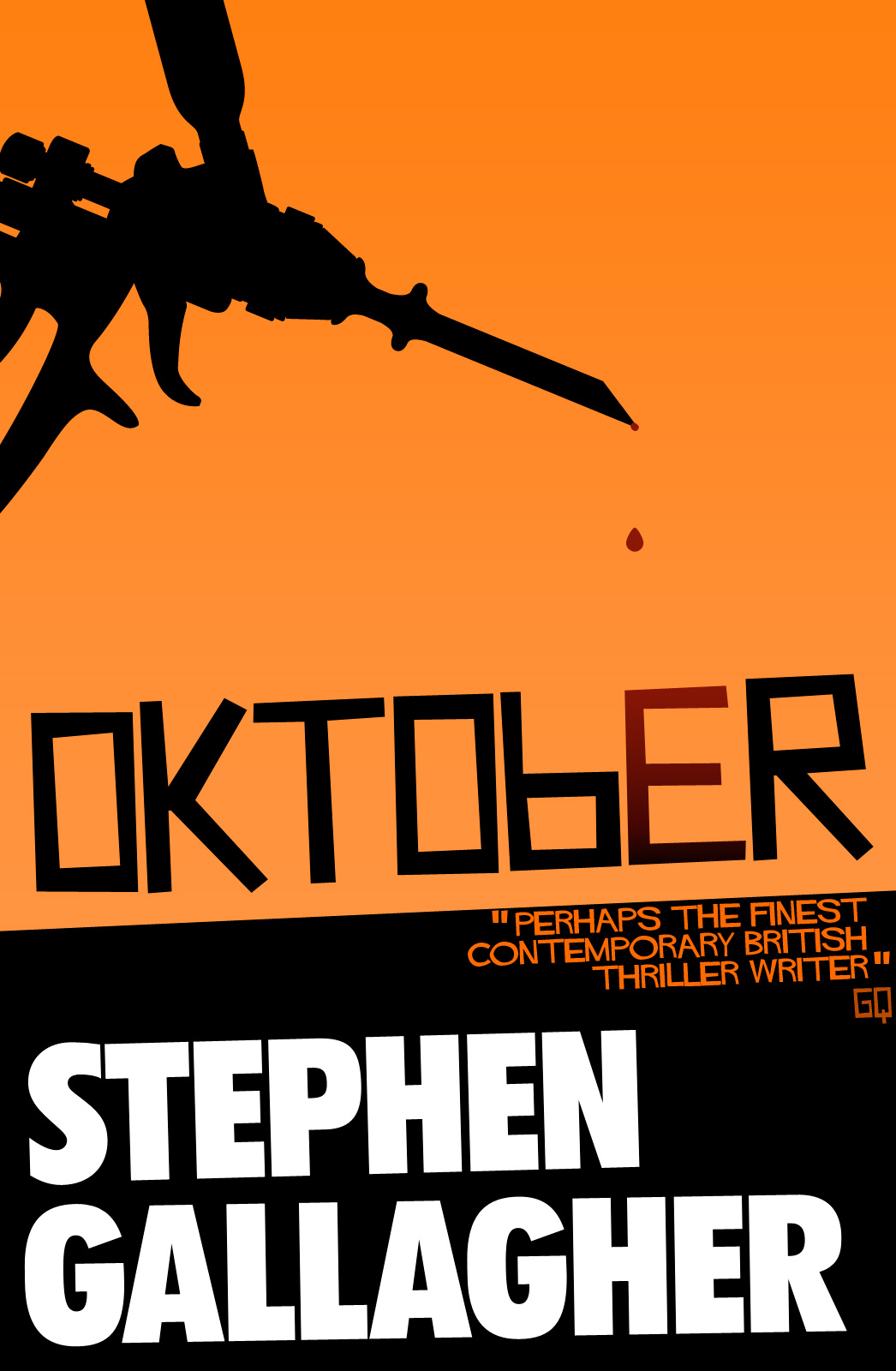

Link for review copies here.

Friday, 16 December 2011

Bernice Summerfield Did My Headshots

Seriously. Lisa Bowerman - aka Doctor Who's Bernice Summerfield - is a talented portrait photographer, specialising in actors' headshots. You'll find numerous examples of her work in the Spotlight directory of performers. She works with traditional film negative and natural light, moving to digital for delivery.


Photo credit: Lisa Bowerman

Okay, so Pitt and Clooney have nothing to worry about. But I love the way she takes honest shots with no flattery or fakery. And technically she's so good that you can zoom in to my eyeball at the highest resolution and see her with the camera reflected there.

For actors it's important to show who you are, not what skilful studio lighting could make you look like fifteen years ago. Having been on the other side of the audition table to hear actors read, I can say that sending in a misleading photo does no one any good at all. Rather than give you a head start, it suggests insecurity and, at worst, delusion.

Writers' headshots are a whole other field of study.

We need to have them but, being writers, we don't want to pay for them. Sometimes your publisher will commission some publicity stills but that doesn't always work out - Hodder & Stoughton once sent me to a man who specialised in photographing fruit for Marks & Spencer. Maybe they chose him because of the "&". I don't know what fruit he had in mind when he studied me - maybe Zombie Cucumber. We took the shots in his attic, with me lurking behind a wormy pillar or looking out around a peeling chimney wall. The result: I looked like a ghoul in the fourth stage of something terminal.

I fared no better when I decided to splash out on some shots of my own. I picked a local wedding photographer with a sideline in industrial work - he should have been good, he had a studio and everything. I asked for no diffusion but he thought he knew better. The results were well nigh unusable - not sharp enough for good reproduction and I looked like one of those primped 80s guys in Movies4Men softcore porn.

Don't tell me you don't know what I'm talking about.

My first professional headshot was for the jacket of Valley of Lights. I forget who put me onto him, but the photographer was Arthur Waite of Arthur Waite Publicity, a one-man operation in a poky studio behind Salford Cathedral just down the road from Granada TV. Arthur looked a little bit like Paul Daniels, as I recall... there was an electric fire warming the studio and a Sheltie lying on a dog bed in the corner. Arthur specialised in photographing Variety acts and advertising copy for The Stage. His portfolio included Ken Dodd, Tom O'Connor, and International Cabaret Stars Margo and Trevor.

I told him what I did and what I needed. He'd never had a writer for a client before. He thought it over then gave me the lighting he used for magicians, which I rather liked the idea of. I liked the work he did, as well.


Photo credit: Arthur Waite Publicity

Hey. I've not changed that much. Maybe I could get away with using this one...

Saturday, 10 December 2011

Bedlam Detective first review

Thanks to Bill Schafer at Subterranean Press for forwarding this Publishers Weekly starred review:
Fiction
The Bedlam Detective
Stephen Gallagher. Crown, $25 (256p) ISBN 978-0-307-40664-4

Set in England in 1912, this masterful whodunit from Gallagher (Red, Red Robin) introduces Sebastian Becker, a former policeman and Pinkerton agent who now works as the special investigator to the Masters of Lunacy, looking into cases involving any “man of property” whose sanity is under question. His latest assignment takes him to the small town of Arnmouth to determine whether Sir Owain Lancaster has gone around the bend. Lancaster returned from a disastrous trip to the Amazon, which claimed the life of his wife and son, only to attribute the catastrophe to mysterious animals straight out of Doyle’s The Lost World. Lancaster believes that the creatures that plagued him in South America have followed him home, and are responsible for the deaths of two young girls, a theory supported by a local legend of a beast of the moor. Gallagher’s superior storytelling talents bode well for future adventures starring the well-rounded Becker. Agent: Howard Morhaim. (Feb.)
Yeah. What he said.

Thursday, 8 December 2011

Salut, Georges

On this, your birthday.

Tuesday, 6 December 2011

The Bedlam Detective

I've just had word that the jacket art is locked, so here it is. The book will be published in hardcover on February 7th by Crown.


The story features ex-Pinkerton man Sebastian Becker, last seen arriving in England with his family at the end of The Kingdom of Bones. He installs his family in cheap rooms in Southwark and takes a gig as Special Investigator to Sir James Crichton Browne, the Lord Chancellor's Visitor in Lunacy. Becker's job is to pursue the criminally insane whose wealth or position protects them from the law.

I'll be mentioning this again. You can count on it.

Friday, 2 December 2011

New to Kindle

Two more of my backlist titles are now available in eBook form. Full info on each title soon, but for the moment here are the new cover designs by Paul Drummond.


On The Boat House:

"Gallagher handles the balance between mundane reality and stomach-turning horror with reassurance and offers a nicely twisted ending to boot. Highly recommended." Nigel Kendall, Time Out

And on Rain:

"Gallagher has become Britain's finest popular novelist, working a dark seam between horror and the psychological thriller."
Arena

Click here to find Rain on Amazon, and here for The Boat House.

Friday, 25 November 2011

Getting Published 101

In the week of the announcement that Penguin have paid £400,000 to acquire a party planning book by celebrity relative Pippa Middleton, it must be hard for new writers to keep their optimism alive. The temptation to dump your first draft straight onto Kindle and wait for the e-millions to roll in must be a powerful one.

Console yourself with this. That £400,000 is just business. The book will be ghostwritten and will go the way of all such rubbish; bought, gifted, unread, remaindered. It has nothing to do with publishing. It's regrettable that a great name like Penguin should be attached to such a venture but the writing was on that wall when they paid a fortune for the meretricious Lace, all those years ago.

Every now and again I get an email to the website asking for advice on getting into print or getting an agent. Here's pretty much what I always say; read on and save me the trouble of saying it again.
Despite a widespread belief that publishers are resistant to new work, they're all on the lookout for good stuff that they can run with. And it's always been harder to get an agent than a publisher. You're asking a publisher to commit to a book, which is a known quantity. An agent commits to a career, which is a major unknown. Often the best time to get a good agent is when you have a publisher's offer.

The traditional strategy is to study what's around and note the kind of publishing house that would seem to be a fit for what you're trying to do. Then find out the name of the fiction editor (a quick phonecall to the switchboard usually does it) and write a brief, polite query letter asking if he or she would be willing to look at your submission. Work on the letter; the verbose, the needy and those who can't spell rule themselves out at this stage. If they ask to see something, send only your best. Not something unfinished, not work-in-progress; keep your work offline and out of the public eye until it's done.

It's an ever-changing market and traditional publishing is under pressure, but it's still the quality route. I shouldn't need to tell you to watch out for the predators and never pay anyone to represent or publish your work, but for safety's sake I'll say it anyway.

Sunday, 20 November 2011

Magic and Memorabilia

Along with Chris Moore I headed down the motorway to Memorabilia last weekend. There I met up with Good Dog, and we had our first decent chat since a fleeting hello at the NFT's South Bank Chimera event. I urged him to get blogging again. Which is slightly ironic, considering my own long periods of blog silence over recent months...

Memorabilia's a twice-yearly UK event where one of the halls in Birmingham's National Exhibition Centre gets turned into a giant dealers' room for mostly SF and media-related goods, old and new, along with a section of autograph-selling tables for mostly TV faces, mostly old. It probably pales by comparison with similar US events, but I enjoy a mooch and usually come home with a few stocking-fillers for friends and family.

I view the autograph tables with a mixture of cringe and curiosity... very few of the personalities involved get more than sporadic visits, and most spend the day fiddling with their pens and chatting with their neighbours. Some have solid achievements in their resumes, like lead roles in old shows, and they're the ones I feel for; but while I'd love to chat to Quiller's Michael Jayston or William Gaunt of The Champions, I come from a tradition where such appreciation is offered over a drink in a Convention bar, not fifteen quid on a table. And not when cheek-by-jowl with someone who did two days' work on Star Wars and has been blagging hotels and expenses off it ever since.

But then I think back to the time when @Audreydeuxpink and I stood in line for a picture and a word with the great Leslie Phillips, and I think, Oh, what the hell. Each to his own magic. But I suppose I feel a share of the pain when the magic falls flat.

As it happened, Good Dog was acting as minder to some of the better-known faces on the weekend's guest list. The organisers have got it together more since the early years when signers were just parked alone with no one looking after them, but I can still find it an uncomfortable spectacle when people with careers have put themselves out there and nobody's stopping by. I can remember The Man from Uncle's Robert Vaughn, alone at his table with no one else around him, looking like the most pissed-off man in the world while attendees tiptoed nervously past at a respectful distance.

That's a Brit thing, perhaps. But it's compounded by the way that the less experienced of the enthusiasts who organise fan weekends and conventions can sometimes show little idea of what's required of them as hosts, especially when their guests are ageing performers, often insecure and uncertain of their reception, lured with a promise of hospitality only to be cut loose to fend for themselves amongst strangers.

They're not those giants you see on the screen; they're rather more like you and me. And I know how I'd feel if it was me out there.

For a start, there was that book signing in Watford in 1989...

The Metropolis image is one of a range of brilliant movie posters created for screenings at San Francisco's Castro Theater and offered in hand printed, limited editions by Memorabilia exhibitor The Dark City Gallery. Those that may look a little dull on the website are actually printed on gold or silver stock, and have to be seen to be appreciated fully.

Thursday, 17 November 2011

Coming Events

Tuesday, 11 October 2011

Writing Software

I was looking for info before buying an upgrade to the latest version of Final Draft (decided against it, no advantages over the version I've got) and came across a link to this free writing software recommended by many.

Haven't tested it, so don't know if it's as good as they say. One thing for certain is that it's not industry standard and scripts would have to be converted to PDFs before being sent out (as opposed to Final Draft files, which just about every production company has the software for). But having managed without dedicated screenwriting software for a dozen years before switching, I can testify that a program taking care of layout while you focus on the writing is a Good Thing.

If you've tried Celtx and have an opinion on it, feel free to add a comment.

Friday, 7 October 2011

Chimera for Sale - Sold!

A note via the website from Stefan - who says he recalls being scared witless by Chimera, as well he might since he was nine years old at the time - sent me to check out this item at movie collectables and memorabilia dealer The Prop Store.


Here's the text, to save you from squinting:
An original ‘Chad’ creature mask used in the 1991 British TV mini-series Chimera, which was watched by over 21 million viewers. The misunderstood creature, created by combining human and ape DNA can be seen throughout the series after being brought up in a fertility clinic acting as a cover for the disturbing project. The full head mask is made from foam latex with prop hair, painted eyes and realistic yellow teeth and gums, the creature features both human and ape features, such as an elongated jaw from the apes, and the size with full head of long hair from the humans, and is a scary thing to behold. Due to its age it has lost its flexibility and as a result is crispy around the neck, and should be handled with care, however the main body of the piece still has integrity and is fairly solid. This piece is supported on a black wooden stand with metal rod, and stands at approximately 42cm (16.5”) tall.
I've no idea what the piece was selling for, as Stefan already had it reserved. My recall is that there were three full head masks created for the show, with every hair hand-stitched into the scalp. Each was a latex skin that fitted over a headpiece core moulded to actor Douglas Mann.

From the way it's painted I'd guess that it's the one used in the barn scene in episode four. I'd be fascinated to know where it's been for all these years. In the mid-90s, one of the Chad masks and costumes featured in a horror exhibition of TV and movie freaks and monsters on Blackpool's promenade - I went along and saw it there, a figure posed in a gloomy cellar like some latterday Elephant Man.

Around the time of filming, I asked sculptor Little John to give me a price for a resin cast finished in the style of some ancient Greek museum bronze. But then along came the tax bill for the script money, and my finances were scuppered for a while. At least I know that this one's heading for a good home.


UPDATE: The Chad 'closeup head' is in the hands of a private collector who's posted some pictures and details online. The closeup head had cable-articulated movement, with expressions created by offscreen operators. Due to wear and tear it's showing its age rather more than the Prop Store's model. You can see it here.

Thursday, 22 September 2011

My Lost Worlds

There's no cover image yet for The Bedlam Detective, so here's my first edition of The Lost World instead.

If it looks a little shabby that's because it cost me less than thirty quid, and that from a dealer who specialised in Conan Doyle material and knew its worth. So I knew it wasn't a steal, though I did think it a good bargain. The binding is tight and the pages are clean and all the photographic plates are present, even including the tipped-in sheet of tissue paper that was there to protect the frontispiece.

Ah, the frontispiece. Have a look at it; Doyle was having fun, here. The photograph purports to be 'the members of the exploring party' and this entire 1912 edition of the novel is presented as a spoof non-fiction published memoir, illustrated with sketches and photographs created or doctored for the occasion.


That bearded Professor Challenger figure seated behind the table - that's Doyle himself. Edward Malone, seated in the foreground, is actually W H Ransford, the photographer responsible for the composite paste-up work which allows illustrator Patrick Forbes to appear as both Professor Summerlee and Lord John Roxton with a change of makeup. Legend has it that Doyle showed up on the doorstep of his brother-in-law, Raffles creator E W Hornung, in full disguise and posing as a thickly-accented German doctor, managing to keep the pretence going for some time until a less-than-amused Hornung saw through the deception.

It's this element of mischief, Doyle's knowing blurring of the line between fantasy and reality, that connects The Lost World to The Bedlam Detective.


Everyone has books that are special to them and The Lost World is one of mine. The one above all others, probably. When I was invited to submit a story to David Pirie's Murder Rooms series, I saw an opportunity to riff on a favourite novel's themes and elements while playing with the fantastic train set that is BBC period drama. Murder Rooms featured the young Arthur Conan Doyle and his relationship with his mentor, Joseph Bell; theirs was a prototype of the Watson-and-Holmes partnership, and here was a way of refreshing the spirit of the stories without having to go over some well-trodden ground. It starred the late Ian Richardson and the equally excellent Charles Edwards, soon to be seen as Michael Palin in Holy Flying Circus.

My episode opened with Doyle at a lantern-slide lecture given by the famous Victorian explorer Everard Im Thurn. Im Thurn was one of the first Europeans to reach the remote plateau of Roraima in Venezuela, model for Doyle's lost world. While the main story goes on to concern itself with a planned Fenian outrage in the heart of London, woven in with it are a collector of dinosaur bones, a fickle young woman named Gladys, a short-tempered former teacher of Doyle's (William Rutherford, played by John Sessions) who would inspire the character of Professor Challenger, and a travelling circus whose elephants moving through English woodland provide a groggy Doyle with a momentary and memorable epiphany.

Fast-forward about five or six years. A conversation with editor and SF historian Mike Ashley set me looking at the subject from another angle. I pictured a real-life man like the novel's Challenger years later, isolated, his memoir exposed as a fraud, his reputation in tatters, a man still clinging to the belief that all of his troubles can be traced back to a time when he saw monsters; and at that point I let go of The Lost World, and launched into the story of guilt, inner conflict, madness and memory that would stand separate and alone as The Bedlam Detective.

In this earlier post I wrote:
I have five different editions of The Lost World... a well-handled first, the Pilot and Rodin annotated edition, a '30s Hodder & Stoughton hardcover, a children's paperback, and the Professor Challenger Omnibus in which I first read the tale. If only the text mattered, then any one of those would do. Or I could junk them all and download the words from Gutenberg. But each of them carries a different charge, of association and of the era when it was published. Each one is a different performance of the text.
Well, since writing that I've acquired a couple more... the two bound volumes of The Strand magazine from early in 1912 containing the story in its original serial form, and issues of The Eagle from 1962 in an adaptation by Richard Jennings with art by Martin Aitchison (see the panel above, and click on it for a larger version).

I was in touch with Martin earlier this year, and he wrote of how much he'd enjoyed the job; adapting the tale again for Ladybird Books a few years later, he'd shown the Eagle artwork to his new editor who'd opted, in the end, to provide younger readers with a take that was just a little less exciting.